
Restorations & implants
Restorations & implants: eat comfortably, smile with confidence
Ceramic restorations, bridges and secure dental implants. Restore chewing and appearance, and regain your confidence.
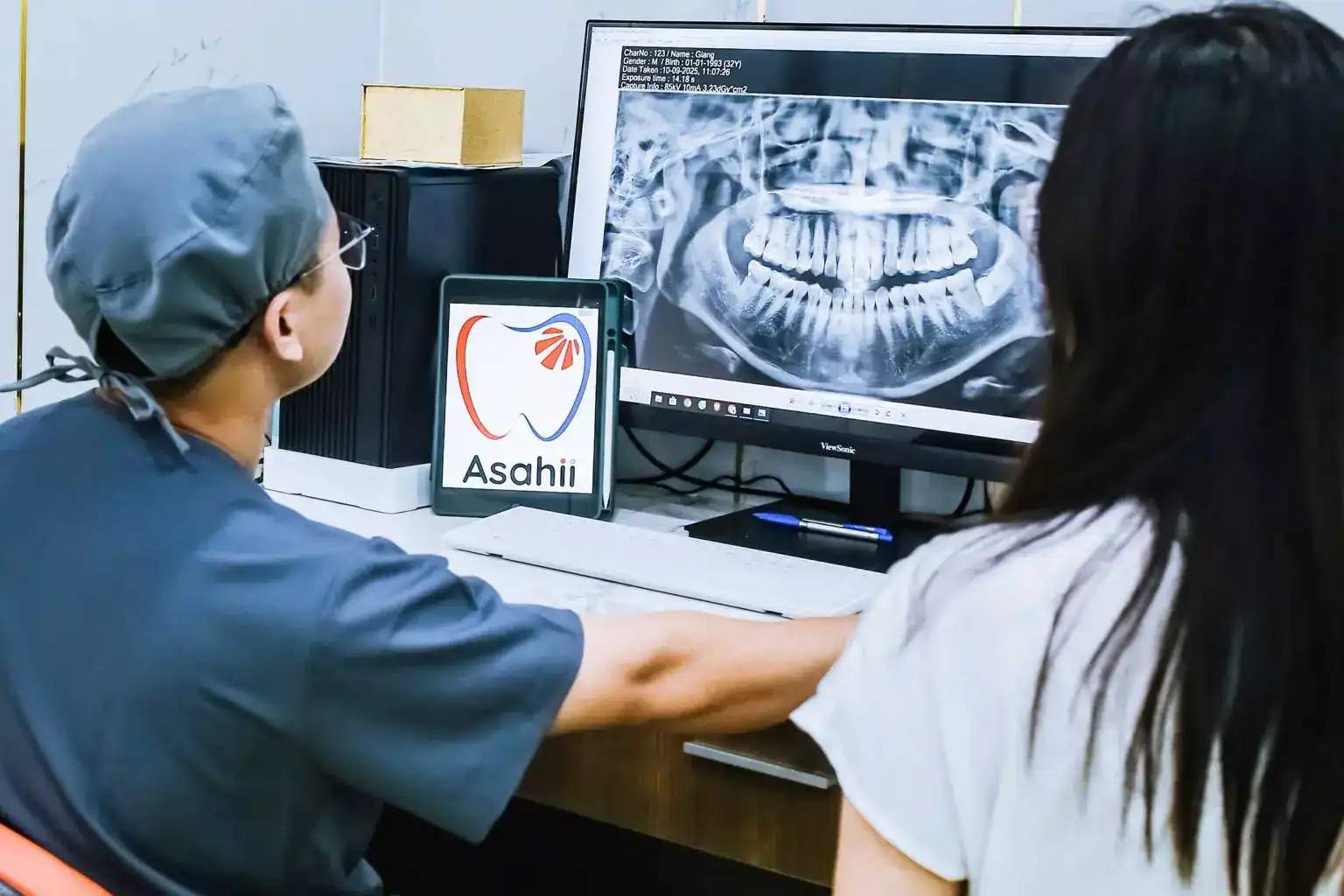
Asahii offers restorative solutions from ceramic crowns and bridges to dental implants. The goal is to restore the shape of your teeth, your ability to chew and a natural appearance.
Treatment is carried out by an experienced team with modern equipment, for precision and durability.
Making sure patients can chew well is something Asahii always cares about. Every implant plan is 100% personalised, built on your bone condition, bite and individual needs, with safety, precision and effectiveness in mind.
-
Genuine materials
Materials of known origin, with a transparent warranty card.
-
A safe treatment plan
Imaging and simulation to check the result before treatment.
-
Genuine implant brands
Dio, Megagen Anyridge (South Korea), Adin (Israel – Germany), Neodent, Straumann (Switzerland), Kontact (France).
-
Preserving bone and natural teeth
Helps prevent bone loss and gum recession, without involving the neighbouring natural teeth.
Advantages of implants
-
Chewing restored
Restores chewing almost like a natural tooth, firmly fixed in place.
-
Helps prevent bone loss
The implant replaces the lost tooth root, helping prevent bone loss and gum recession.
-
Preserves natural teeth
The natural teeth around the gap are left untouched.
-
Natural look, long-lasting
A natural appearance, durable and long-lasting.
The implant process
-
1. Placing the implant
The dentist makes a small opening in the jawbone and places the implant. This takes about 20–30 minutes.
-
2. Osseointegration
The implant needs time to integrate with the bone; this can take 3–6 months.
-
3. Fitting the crown
Once the implant has fully integrated, the dentist attaches the abutment and the ceramic crown on top to finish.
Techniques for complex cases and full-arch tooth loss
-
Sinus lift, bone grafting
When the jawbone has receded and lacks height or volume: closed or open sinus lift, bone grafting with a biological membrane, and rebuilding the jaw ridge before implant placement – assessed with a 3D Cone Beam CT.
-
Soft-tissue grafting around implants
Connective tissue grafts and keratinised gum help protect the implant neck, make cleaning easier and give a natural gum line.
-
All-on-4 / All-on-6
A fixed full-arch restoration on 4 or 6 implants for people who have lost all teeth in an arch, chewing almost like natural teeth, with fewer implants than replacing each tooth.
When should you consider a dental implant?
When you have lost one or more teeth, have jawbone loss or difficulty chewing… Implants are a solution chosen for durability, appearance and preserving bone.
- Ceramic crowns and bridges
- Dental implants to international standards
- Care instructions and regular check-ups
- Clear manufacturer warranty
Frequently asked questions
Does getting an implant hurt? How long does it take?
The procedure is done under local anaesthesia, so it is almost painless; you may feel mild discomfort for the first 1–2 days. Placing the implant takes about 20–30 minutes; the implant then needs 3–6 months to integrate with the bone before the ceramic crown is fitted.
Who is suitable for implants?
People with missing teeth who are in stable general health and have enough jawbone volume. Where bone has been lost, a bone graft can make implant placement possible.
How long do implants last?
With proper care, implants can last 15–20 years or more. Careful cleaning and regular check-ups help them last as long as possible.
How should I care for an implant afterwards?
Keep the new implant area clean, brush gently, use floss or a water flosser, avoid smoking and come back for check-ups as scheduled.
When is a bone graft needed before an implant?
When the jawbone has receded a lot or there is not enough bone volume to support the implant. Your dentist will advise after a Cone Beam CT scan.
Book a visit
Book a consultation : restorations & implants
Leave your phone number – our front desk will call you back to find a time that suits you.
- +84 928 888 121
- Message Asahii on Zalo
- No. 2, Lane 37 Lê Thanh Nghị Street, Hai Bà Trưng, Hà Nội
- 8:30 am – 7:00 pm, every day