
Orthodontics & braces
How long do braces take? The stages of orthodontic treatment
How long braces take, the stages of a course of orthodontic treatment, what makes it longer or shorter, and how to keep your treatment on schedule.
· 4 min read ·

Orthodontics & braces
What retainers are, why teeth drift back after braces, the types of retainer, how long to wear them, how to clean them and what to do if one breaks or is lost.

The day your braces come off is a happy one, but it is not the finish line. Teeth that have just been moved need time for the bone and the ligaments around their roots to settle. During that time, if nothing holds them, they tend to drift back towards where they were. That is exactly what a retainer does: it holds the teeth where the orthodontist placed them until everything is stable.
For these reasons orthodontists treat retention as part of the treatment, not an optional extra.

Many people are given a combination, for example a bonded wire on the lower teeth and a removable tray for the upper. The choice depends on the original problem, the risk of relapse and your habits.
Your orthodontist sets the schedule for your case, but a common pattern is:
Stopping early is the most common reason teeth become crowded again after braces. At Asahii, Dr. Chu Thuy Trinh writes the wearing schedule and the review dates after debonding into your treatment plan; that record is kept in the clinic's system and can be viewed in the Zalo Mini App, so if you forget, you look it up rather than guess.
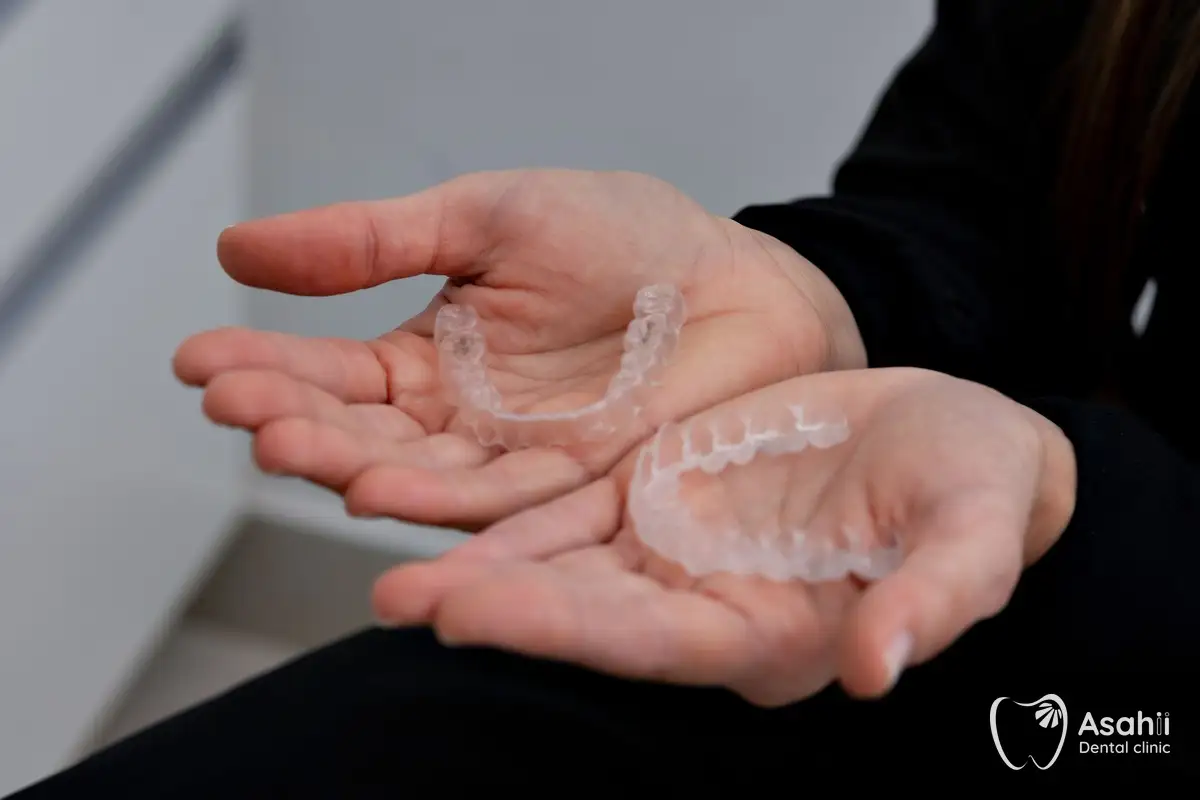
The right type and duration of retention can only be set after a doctor has examined you. The retainers we offer are listed on our orthodontics and braces page; book a check-up by hotline 0928 888 121 or Zalo if your retainer has a problem; the clinic is open every day of the week, 08:30 to 19:00, so a retainer lost at the weekend does not have to wait.
A few days usually do no harm; put it back in straight away. If it feels tight or will not go in, contact the clinic to have it checked.
Many orthodontists advise wearing it at night long term, because teeth can shift slightly with age. The exact schedule is set by your doctor for your case.
The wire itself does not, but tartar and plaque collect around it if it is not cleaned well. Floss under the wire and have regular scaling.
Brush it well with a soft brush and mild soap, or use retainer cleaning tablets. Avoid hot water and strong cleaning agents. If it is badly stained or smells, ask your doctor about a new tray.
This article is general information reviewed by our dentist; it is not a diagnosis. Only an examination can say what your teeth need.
Tap a star — 1 is not helpful, 5 is very helpful.
Thank you! Your rating helps us write better.
Could not send right now — please try again later.Leave your number — reception calls back to agree a time. The dentist explains and quotes before any treatment.
How long braces take, the stages of a course of orthodontic treatment, what makes it longer or shorter, and how to keep your treatment on schedule.
· 4 min read ·

Metal braces, ceramic braces and clear aligners compared on appearance, hygiene, appointments and suitability, and how your orthodontist chooses.
· 4 min read ·

A practical guide to oral hygiene with braces: the first days, food to limit, brushing around brackets, useful tools and what to do when a bracket comes loose.
· 4 min read ·
Book a visit
Leave your phone number – our front desk will call you back to find a time that suits you.