Asahii Dental clinic
+84 928 888 121 Book a visit

Oral care at home

Caring for a dental implant: the first days and the years after

Caring for a dental implant: the first 24 hours, eating, cleaning the site, long-term hygiene and the warning signs that mean you should come back.

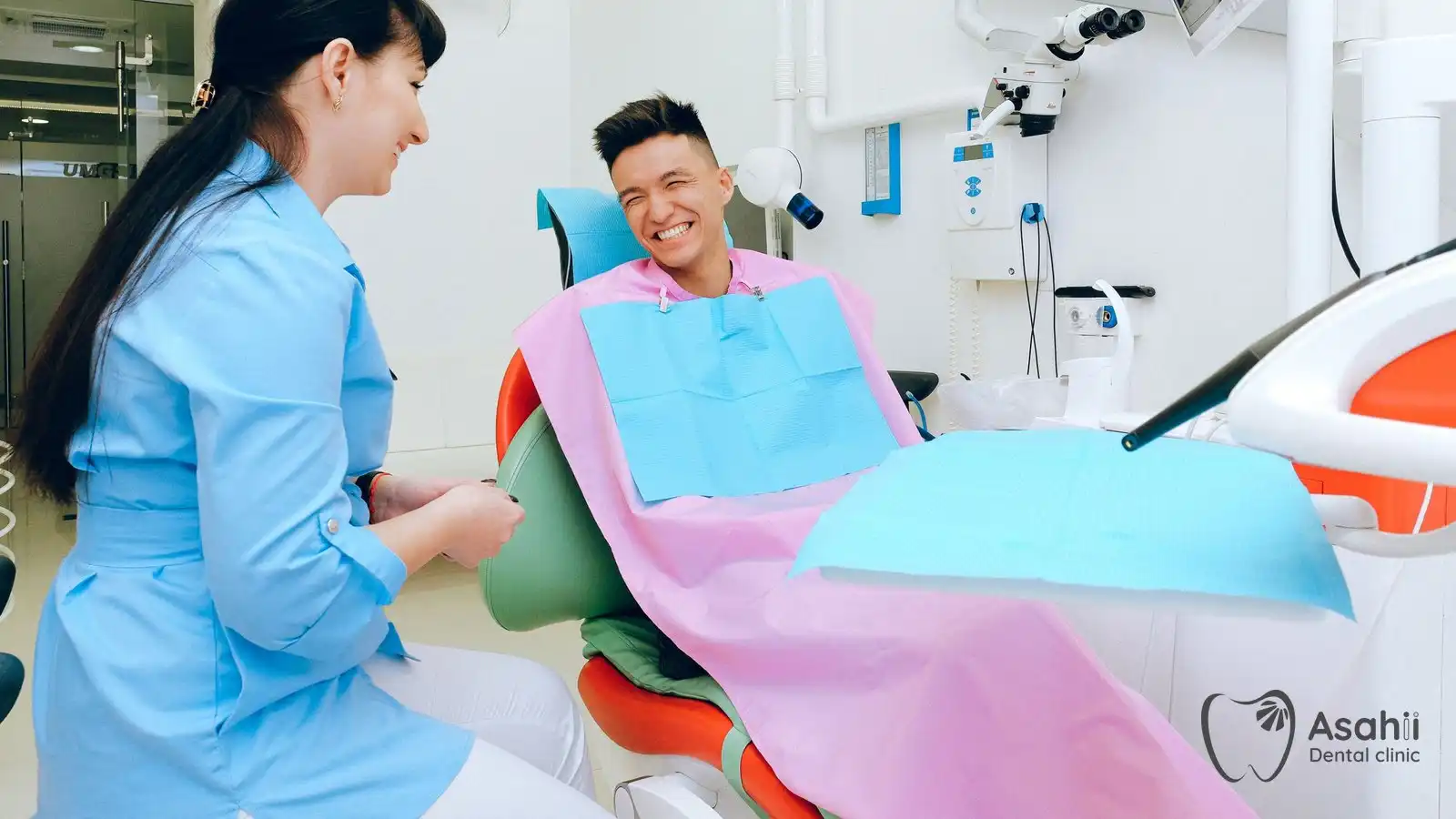
A patient talks with the dentist about caring for a new implant

The outcome of implant treatment depends not only on the surgeon but on how you look after it afterwards. The first few days decide how the site heals; the years after decide how long the implant lasts. This article is in two parts: the first days after the post is placed, and long-term care once the tooth is fitted.

The first 24 hours after placement

  • Bite on the gauze over the site for about 30 to 60 minutes to stop the bleeding. Replace it with fresh gauze if it keeps oozing; slightly blood-stained saliva on the first day is normal.
  • No vigorous rinsing, no spitting, no straws on the first day, so the blood clot in the wound is not disturbed.
  • Cold compress on the cheek, 15 minutes on and 15 minutes off, for the first few hours to limit swelling.
  • Take the medicines exactly as prescribed: the full course of antibiotics (if given) and pain relief on schedule. Do not add other medicines yourself.
  • No smoking, no alcohol. Smoking is one of the main reasons an implant fails to integrate.
  • Rest, sleep with your head raised, avoid strenuous activity.
  • The anaesthetic wears off after a few hours; take care not to bite your lip or cheek while it is still numb.

Eating in the first days

Soft, warm food such as noodle soup suits the first days after an implant; avoid chewing on that side
  • Day one: cool or lukewarm, soft or liquid food: porridge, soup, yoghurt, smoothies (no straw).
  • The following days: soft rice, fish, eggs, well-cooked vegetables. Chew on the opposite side.
  • Avoid hard, crunchy food and anything with small seeds (sesame, guava) that can lodge in the wound; avoid very hot or spicy food.
  • Drink plenty of water.

Cleaning the site

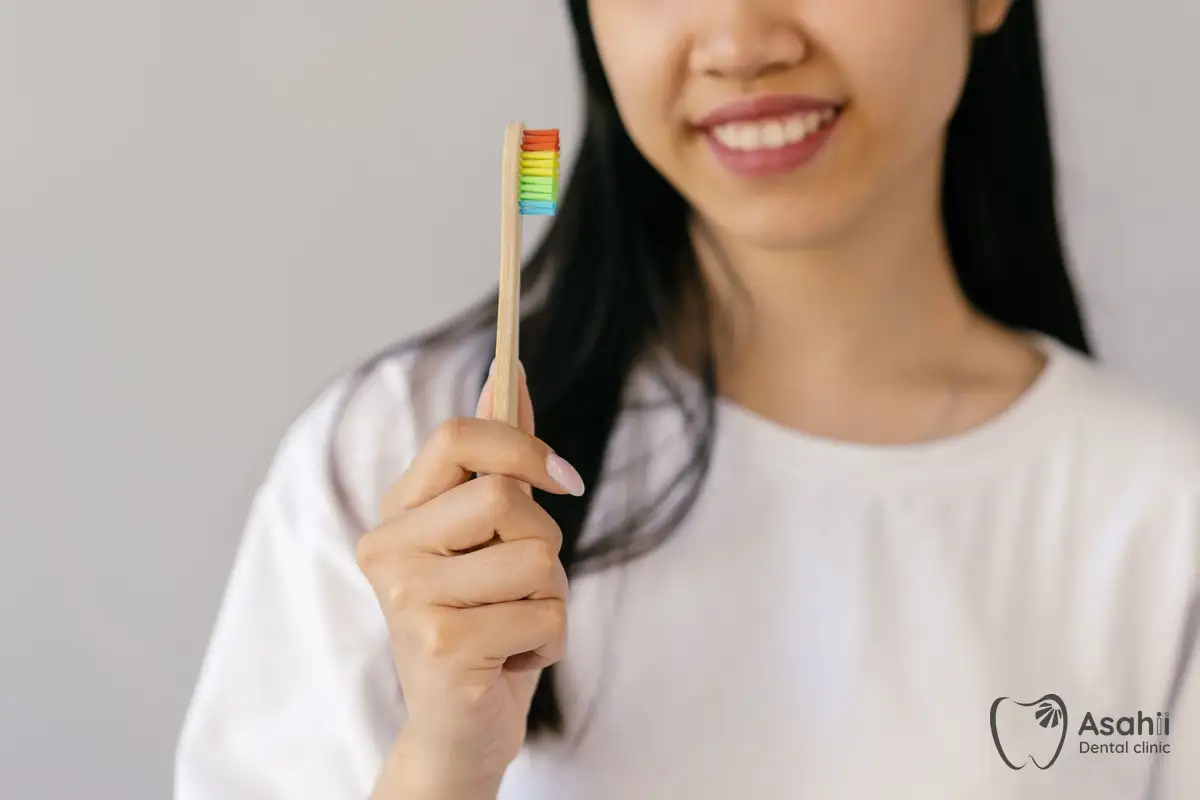
A soft-bristled toothbrush cleans gently around the implant without hurting the gums
  • Day one: do not brush directly over the wound. Brush the other teeth gently.
  • From day two: rinse gently with saline or the mouthwash prescribed after each meal.
  • Once the gum has healed (usually after a week): brush gently around the site with a very soft brush. If there is a healing cap above the gum, brush gently around it.
  • Come in for suture removal (if the sutures do not dissolve) and review as scheduled. For patients treated at Asahii Dental Clinic, these dates are sent as automatic reminders through the clinic's Zalo Mini App.

How much swelling, pain and bruising is normal

Swelling usually peaks on the second or third day and then settles. There may be slight bruising on the cheek or neck. Pain eases day by day with the medicine prescribed. What is not normal: swelling or pain that increases after the third day, fever, or pus.

Long-term care once the tooth is fitted

An implant cannot decay, but the gum and bone around it can still become inflamed if plaque builds up, a condition called peri-implantitis. It develops quietly and can destroy the bone around the post. So:

  • Brush twice a day, paying attention to the gum line around the implant tooth.
  • Clean between the teeth every day with floss, interdental brushes or a water flosser, especially where the implant tooth meets its neighbours and under any implant-supported bridge.
  • Attend check-ups and scaling as scheduled, usually every six months. The dentist uses instruments that do not scratch the implant surface and takes periodic X-rays to monitor the bone. At Asahii each X-ray is kept in your record so the bone around the post can be compared year on year, and because the clinic is open every day of the week, 08:30 to 19:00, a six-monthly visit is easier to fit around work.
  • Do not smoke.
  • Wear a night guard if you grind your teeth, so the crown and implant are not overloaded.
  • Avoid biting hard objects (ice, nuts, bottle caps) with the implant tooth.

Warning signs: come back straight away

In the first days:

  • Bleeding that does not stop despite biting on gauze correctly.
  • Swelling or pain that increases after the third day; fever; pus or a bad smell from the wound.
  • Numbness of the lip, chin or tongue that persists after the anaesthetic has worn off.
  • The healing cap or temporary tooth comes off, or the sutures come out early.

Long term:

  • Red, swollen gums around the implant, or bleeding when brushing.
  • An implant tooth that feels loose.
  • Pain when chewing on the implant tooth.
  • Metal of the post becoming visible as the gum recedes.

Each case has its own instructions depending on the technique and the bone, so follow the sheet your dentist gives you after surgery. If you notice any of the signs above, contact the clinic by hotline 0928 888 121 or Zalo so that Dr. Tran Van Thang can check it early. See also our prosthetics and implants page.

Frequently asked questions

When can I eat normally after implant surgery?

Usually after about a week, once the gum has healed, you can eat almost normally but should still avoid chewing hard on the implant site until the tooth is fitted. Your dentist will advise for your case.

Do I need antibiotics after implant surgery?

It depends on the case and the dentist's assessment. If they are prescribed, take the full course for the full number of days, and do not stop early when you feel better.

Can an implant get decay?

No, but the gum and bone around it can become inflamed without good hygiene. So you still need to brush, clean between the teeth and have regular scaling.

How often should I have check-ups once the tooth is fitted?

Usually every six months, or as scheduled by your dentist. They check the gum and the bite, and take periodic X-rays to monitor the bone around the implant.

This article is general information reviewed by our dentist; it is not a diagnosis. Only an examination can say what your teeth need.

Was this article helpful?

Tap a star — 1 is not helpful, 5 is very helpful.

Share: Facebook Email

Considering restorations & implants?

Leave your number — reception calls back to agree a time. The dentist explains and quotes before any treatment.

Related services

Read next

The dentist shows the patient an X-ray while explaining the implant procedure
Dental implants

How dental implant treatment works, step by step

Dental implant treatment step by step: examination and scans, planning, placing the post, the healing period, fitting the crown, and who needs extra care.

· 5 min read ·

Book a visit

Book a restorations & implants consultation

Leave your phone number – our front desk will call you back to find a time that suits you.

Request an appointment

Our front desk will call you back to find a suitable time. Your details are protected under our privacy policy.