Porcelain veneers and crowns: what is the difference?
How porcelain veneers differ from crowns: tooth removed, who they suit, what decides how long they last, and how your dentist chooses between them.
Porcelain veneers and porcelain crowns both use porcelain to improve the shape and colour of front teeth, so they are often confused. The core difference: a veneer is a thin layer of porcelain bonded to the front surface of the tooth, while a crown covers the whole tooth. That difference decides how much tooth is removed, which cases each suits, and how the tooth bears load afterwards.
How much tooth is removed
Veneer: only a very thin layer from the front surface, sometimes almost none. The back and most of the biting edge are kept.
Crown: the whole tooth is trimmed, front, back, both sides and the biting surface, so the porcelain can wrap around it.
Removing less means keeping more enamel, less effect on the pulp, and more natural tooth left for any future work. At Asahii Dental Clinic veneers are made in Emax or Lisi ceramic; crowns come in Emax, Lava Esthetics, Katana or zirconia, depending on position and chewing load.
Who suits what
Veneers suit healthy teeth whose problem is on the front surface:
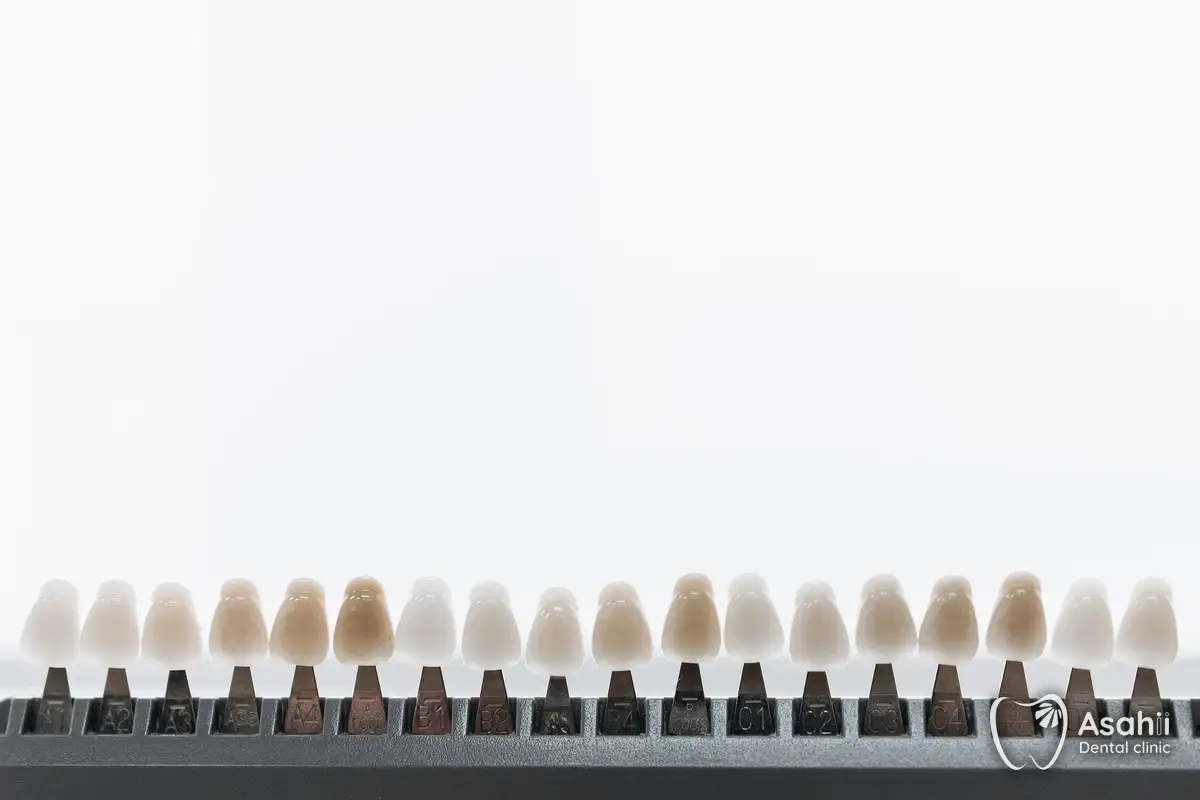
Porcelain shade samples: veneers and crowns are both colour-matched to the natural teeth
Front teeth discoloured in a way whitening does not fix (mild tetracycline staining, fluorosis).
Small chips on the biting edge.
Small gaps you want closed.
Teeth that are slightly short, slightly uneven or irregular in shape.
Crowns suit teeth that are already weak or have lost a lot of structure:
Root-treated teeth.
Badly broken teeth, or teeth with large fillings on several surfaces.
Heavily worn or cracked teeth.
Teeth that will support a bridge.
Veneers are not suitable for teeth in a crossbite or an edge-to-edge bite, or for heavy grinders who are not yet managed, because the forces can chip or debond the porcelain. Badly crooked teeth should be straightened rather than "covered" with many veneers. See also Porcelain crowns: when you need one, and when you should not.
What decides how long they last
Both veneers and crowns can last many years, but their lifespan is not in the porcelain itself. It is in:
How much enamel remains: a veneer bonded to enamel holds far better than one bonded to dentine.
Your bite and habits: grinding, nail biting, opening packaging with your teeth, chewing ice.
Hygiene and gum health: the porcelain margin is where decay and gum inflammation start if it is not kept clean.
Bonding technique and materials: keeping the tooth dry during bonding, the type of cement, the type of porcelain.
Regular check-ups: catching an open margin or a small chip early.
Nobody can promise a specific number of years; your dentist can only tell you about the factors you control.
How the dentist advises you
When you come in wanting "nicer front teeth", the dentist will:
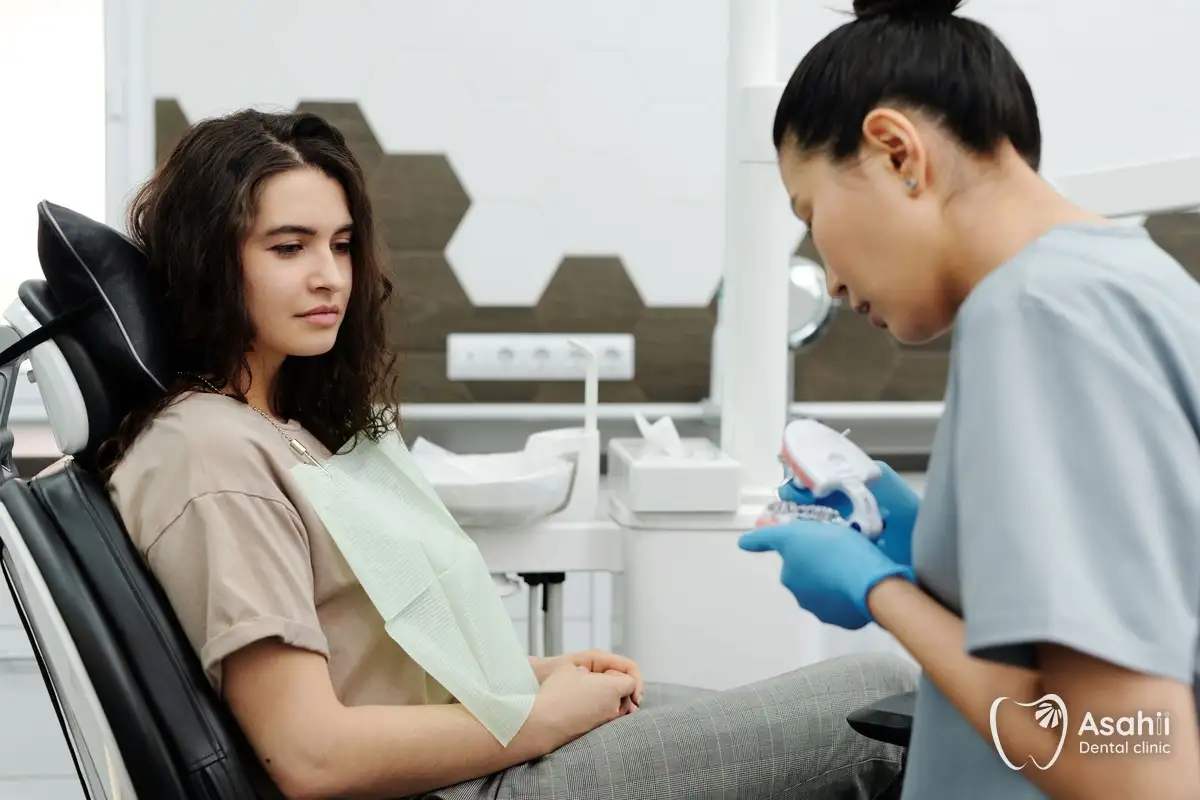
The dentist explains the difference between a veneer and a crown on a jaw model
Examine you and take X-rays to check the pulp, roots, bone and gums.
Look at your bite: how the front teeth meet, and whether you grind.
Assess the colour, shape and position of each tooth and your smile line.
Ask what you want: how much change, how much trimming you accept, your timeframe and budget.
From this they propose one or more options, which may be combined: whitening first and then veneers on a few teeth; braces first and porcelain later; or just composite bonding. The option that keeps the most natural tooth is usually preferred. At Asahii each option comes with a clear price and is written down so you can compare before deciding; if braces come first, that part is handled by Dr. Chu Thuy Trinh, the clinic's orthodontist. Photographs taken before treatment are kept in your record to look back on later.
Caring for veneers
Brush and floss as normal, with a toothpaste that is not highly abrasive.
Avoid biting hard things with your front teeth; cut apples and corn into pieces.
Limit coffee, tea and smoking: the porcelain does not stain, but the margins and the natural teeth next to it do.
Wear a night guard if you grind.
Attend regular check-ups.
When to see us straight away
A veneer or crown that has debonded, chipped or feels loose.
Sensitivity that lasts for weeks after the work was done.
Swollen or bleeding gums around the porcelain.
Pain when biting.
Choosing between veneers and crowns needs an examination and X-rays. See our cosmetic dentistry page or book a consultation by hotline 0928 888 121, Zalo or the Mini App.
Frequently asked questions
Do veneers require trimming the teeth?
Usually a very thin layer from the front surface; in some cases almost none. The amount depends on the shape of the tooth and the goal, and the dentist will tell you beforehand.
Can veneers come off?
They can, especially with biting on hard things, grinding, or bonding to a tooth with little enamel left. Correct bonding technique and avoiding those habits make veneers last longer.
Can a root-treated tooth have a veneer?
Root-treated teeth are usually brittle and discoloured, so dentists tend to advise a crown for protection. Some front teeth with plenty of structure left can take a veneer; it needs a specific examination.
Should I whiten before or after veneers?
Before. Porcelain does not change colour with whitening, so whiten the other teeth first and then choose the veneer shade to match.
This article is general information reviewed by our dentist; it is not a diagnosis. Only an examination can say what your teeth need.
Was this article helpful?
Tap a star — 1 is not helpful, 5 is very helpful.
Thank you! Your rating helps us write better.
Could not send right now — please try again later.
When a porcelain crown really helps, when a filling, veneer or braces are better, the crown procedure step by step, and how to care for a crowned tooth.
Who teeth whitening works for, why teeth discolour, in-clinic versus at-home whitening, who should not whiten, sensitivity afterwards and keeping the result.