
Oral care at home
Brushing, flossing and water flossers: how to do it right
How to brush properly, choose a brush and toothpaste, use floss and a water flosser, and the common mistakes in everyday oral hygiene.
· 4 min read ·

Children's dentistry
Why baby teeth matter, the signs of decay in children, prevention at home, when the first dental visit should be and how to help a child not fear the dentist.

"They are only baby teeth, they will fall out anyway" is the thinking that leads to early extractions, pain, children who will not eat, and permanent teeth that come through crooked. Baby teeth have thinner enamel than adult teeth, so decay spreads faster and reaches the pulp sooner. But decay in baby teeth is preventable, and prevention starts before the first tooth appears.
Baby molars can be in use until around ten to twelve years of age, so they need to last for years.
Decay in children is usually painless until it is large, so by the time you see a hole it is already late.

Bring your child when the first tooth appears, and at the latest by their first birthday, then every six months. The first visit is gentle: the dentist looks at the teeth and gums, shows parents how to brush, discusses diet, and may apply fluoride. Early visits catch white spots that can be reversed with fluoride instead of filled, and let the child get used to the clinic before anything hurts.
When the first permanent molars come through around age six, the dentist may apply fissure sealants to prevent decay. Routine visits are also when the dentist watches how the permanent teeth come through and how the jaws grow; at Asahii, Dr. Chu Thuy Trinh looks after growth-guidance orthodontics for children (functional appliances such as the Twin Block, expanders, or Invisalign First) when early intervention is needed, and explains the options and costs to parents before anything is done.
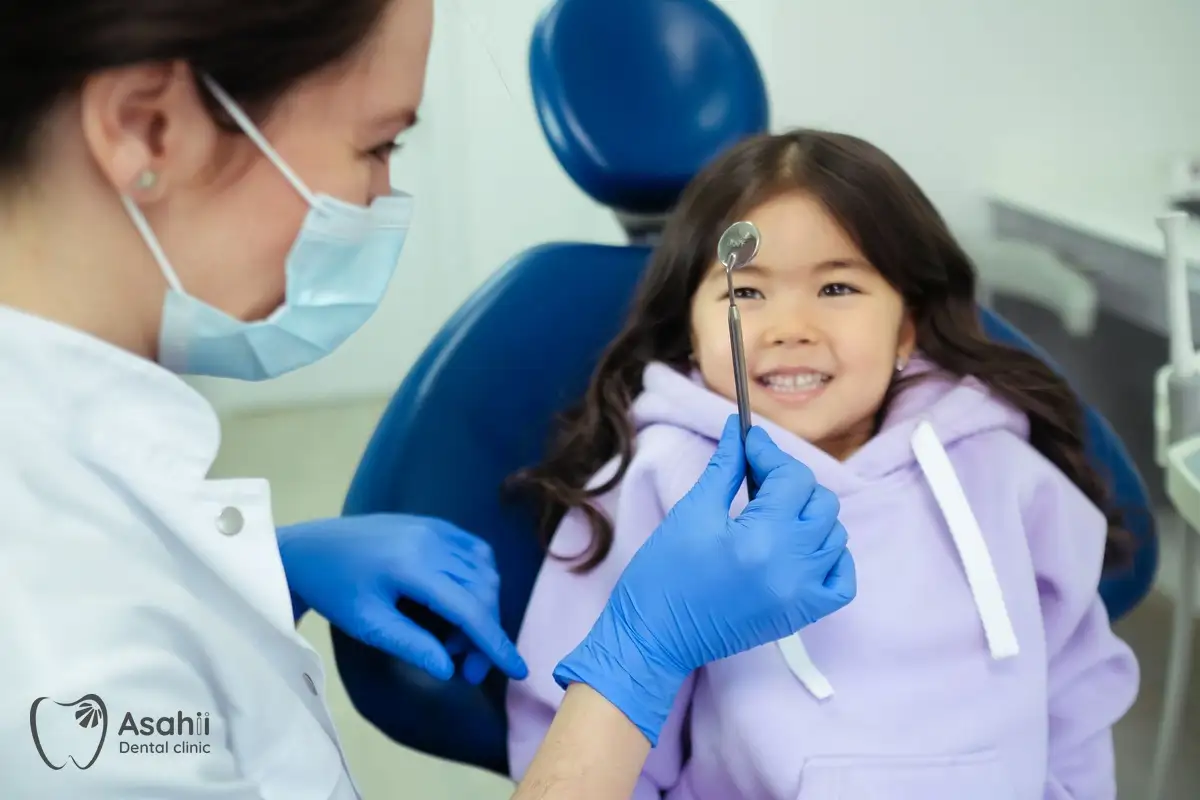
How far the decay has gone and the right treatment for your child can only be decided by an examination. See our preventive dentistry page or book an appointment for your child by hotline 0928 888 121, Zalo or the Mini App.
When the first tooth appears, and at the latest by the first birthday, then every six months. Early visits prevent decay and let the child get used to the clinic before anything hurts.
Yes. Decay in baby teeth spreads quickly to the pulp, causes pain and can affect the adult tooth developing below. Early decay may only need fluoride; a cavity usually needs a filling. The dentist decides after an examination.
Yes, with a very thin smear the size of a grain of rice, brushed by a parent. Fluoride is an effective way to prevent decay; ask your dentist about the right strength.
Milk sitting on the teeth all night is a common cause of decay in the upper front teeth of young children. Wipe the teeth after a night feed, stop night bottles early, and never let a child fall asleep with a bottle of milk or juice.
This article is general information reviewed by our dentist; it is not a diagnosis. Only an examination can say what your teeth need.
Tap a star — 1 is not helpful, 5 is very helpful.
Thank you! Your rating helps us write better.
Could not send right now — please try again later.Leave your number — reception calls back to agree a time. The dentist explains and quotes before any treatment.
How to brush properly, choose a brush and toothpaste, use floss and a water flosser, and the common mistakes in everyday oral hygiene.
· 4 min read ·

Khám răng lần đầu gồm những gì, đặt lịch qua hotline, Zalo, form hay Mini App, cần mang theo gì, và vì sao bác sĩ báo kế hoạch, chi phí trước.
· 4 min read ·

How tartar forms, the benefits of regular check-ups and scaling, how often suits different people, what to expect afterwards and how to book.
· 3 min read ·
Book a visit
Leave your phone number – our front desk will call you back to find a time that suits you.