Early orthodontic treatment for children: when it helps and when to wait
What early (two-phase) orthodontic treatment is, which problems are usually treated early, when waiting is better, and how parents can prepare.
Article series · Part 2 of 12Braces for kids: a parent's guide
When the orthodontist says "it would be good to treat this early", many parents wonder: my child is so young, is it really necessary, and will they need braces again later? And when the orthodontist says "not yet, let's keep an eye on it", some parents worry they are missing the moment. This article explains what early orthodontic treatment is, why only some children need it, and how parents and orthodontist decide together.
In short: • Early orthodontic treatment takes place while a child still has mixed teeth, usually around 6 to 10, to guide the jaws and correct problems that may get worse. • Only some conditions call for early treatment, such as a crossbite, a skeletal underbite, very prominent upper front teeth, or an open bite with a habit; many children only need monitoring. • After early treatment many children still need a second phase of braces, though it is often simpler. • Whether to treat early can only be decided after an examination, X-rays and a talk with the parents.
What is early orthodontic treatment?
Early treatment takes place while a child still has a mixed dentition, usually between about six and ten, when baby teeth and permanent teeth are in the mouth together. The aim is not straight teeth straight away, but to:
Guide the growth of the jaws while they are still developing.
Correct problems that may get worse if left.
Help the permanent teeth come in to a better position.
Help the child stop habits that are affecting the teeth and jaws.
That is why it is also called two-phase treatment: phase one is early, with a narrow goal and usually short; then comes a rest period while the permanent teeth erupt; phase two, if needed, is full treatment once nearly all the baby teeth have gone.
Problems that are often considered for early treatment
Each case is decided on its own, but in general orthodontists consider early treatment for:
Crossbite
One or more upper back teeth sit inside the lower teeth when biting. A crossbite can make the lower jaw slide to one side every time the child closes. In children a narrow upper arch can often be widened while the bone is still growing.
Skeletal underbite
The lower front teeth sit in front of the upper ones. When the cause involves an underdeveloped upper jaw, some appliances work better if used while the child is still growing.
Very prominent upper front teeth
Front teeth that stick out a lot are more easily broken in falls or knocks during play. In some children, especially when the lower jaw is set back, a functional appliance may be recommended.
Open bite and habits
The front teeth do not meet when biting, often together with thumb sucking or tongue thrusting. Stopping the habit early is an important part of treatment.
Severe crowding or early tooth loss
When baby teeth are lost early or the arch is very tight, the orthodontist may hold the space or watch closely so the permanent teeth have room.
When is it better to wait?
Many conditions do not need early treatment. Mild crowding, gaps when the front teeth first come in, or mild protrusion of the teeth are usually monitored and treated once, after all the baby teeth have gone. Treating early when it is not needed can lengthen the total time in appliances without extra benefit.
The orthodontist weighs up:
Whether the problem gets worse over time.
Whether treating now is easier or more effective than treating later.
Whether the child is old enough to wear and look after an appliance.
The risk to the teeth if left alone, such as front teeth that break easily.
Appliances commonly used in early treatment
Depending on the case, the orthodontist may use:
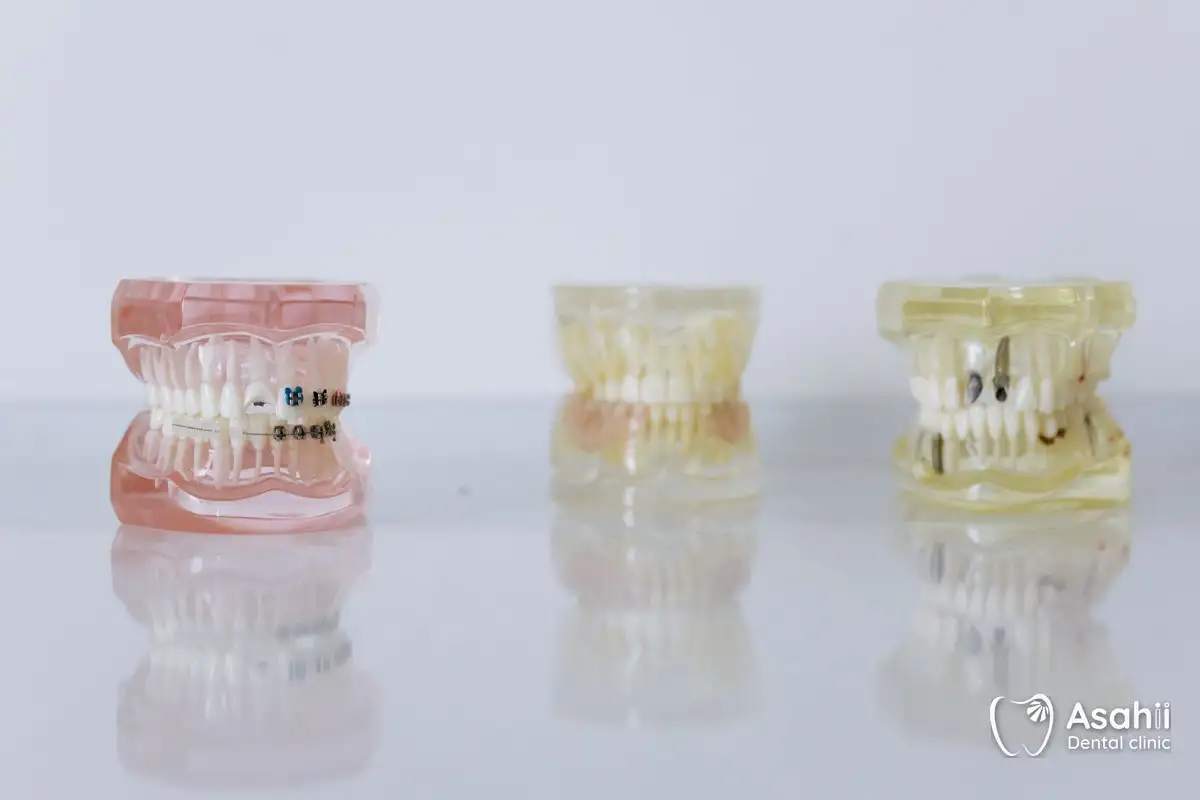
Appliances and braces: some cases need early treatment, others only regular checks and treatment later
An expander, fixed or removable, to widen the upper arch.
A functional appliance, such as a Twin Block, to guide how the jaws relate.
A facemask to bring the upper jaw forward in some skeletal underbites.
A space maintainer when a baby tooth is lost early.
A tongue crib or other appliance to help break a habit.
Clear aligners designed for the mixed dentition (such as Invisalign First) in some cases the orthodontist finds suitable.
The appliance, how long it is worn and the visit schedule can only be set after the orthodontist has examined your child and read the X-rays. At Asahii Dental Clinic, growth-guidance orthodontics for children is led by Dr. Chu Thuy Trinh; when there is more than one route (a functional appliance or Invisalign First, for instance), the options are laid side by side, the plan is written down item by item with its costs, and nothing starts until the parents have confirmed it.
After early treatment, will my child still need braces?
Possibly. After phase one, many children still need phase two to align the permanent teeth and finish the bite. Phase two usually has a different goal, though: if phase one has dealt with a skeletal problem or a habit, the later phase may be simpler. Some children do not need phase two at all. The orthodontist cannot say for certain at the start, because it depends on how the teeth and jaws develop over the next few years. That is why the X-rays and photographs from each visit should be kept; at Asahii they sit in the child's records so the doctor can compare them year by year.
The mixed-teeth years, around 6 to 10, are when the dentist weighs treating early against waiting
Tip from Dr. Chu Thuy Trinh: Early treatment is only worth it when it clearly makes the later stage easier. If waiting is fine, I tell parents so and we set a date to check again.
How parents can help
Keep the appointments, including during the rest period between the two phases. Visits are reminded through the Zalo Mini App, and the clinic is open every day of the week, 08:30 to 19:00, so you can find a time outside school hours.
Remind your child, and check, that a removable appliance is worn for the hours prescribed.
Help your child clean around the appliance, especially younger children who cannot yet brush thoroughly.
Tell the orthodontist if the appliance is loose or broken, or if your child has pain that does not settle.
Your child notices the jaw is off to one side or finds it hard to close the mouth.
The appliance is broken, digging in, or causing sores on the cheek or tongue.
Whether early treatment is right can only be decided after an examination, X-rays and a conversation with you. See our orthodontics and braces page or book a visit for your child by hotline 0928 888 121, Zalo or the Mini App.
Frequently asked questions
Does early orthodontic treatment hurt?
Your child may feel some pressure, tenderness or awkwardness for the first few days with a new appliance or after each adjustment. This usually fades; if the pain is strong, contact the clinic.
How long does phase one usually last?
Usually shorter than full treatment, but the exact time depends on the problem and the appliance. The orthodontist gives an estimate after the examination and X-rays.
What if we miss the window for early treatment?
Many problems can still be treated when the child is older; the options may simply be different. For some skeletal problems, treatment after growth has finished can be more complex. An early check tells you which group your child is in.
Can a young child really look after an appliance?
That is one of the things the orthodontist assesses before suggesting treatment. With young children, reminders and support from parents matter a great deal.
This article is general information reviewed by our dentist; it is not a diagnosis. Only an examination can say what your teeth need.
Was this article helpful?
Tap a star — 1 is not helpful, 5 is very helpful.
Thank you! Your rating helps us write better.
Could not send right now — please try again later.
When a child should have a first orthodontic check, signs in the teeth, jaws and habits that parents can notice at home, and what the first visit involves.