When should a child first see an orthodontist? Signs parents can spot
When a child should have a first orthodontic check, signs in the teeth, jaws and habits that parents can notice at home, and what the first visit involves.
Article series · Part 1 of 12Braces for kids: a parent's guide
Many parents assume braces only come into the picture once all the baby teeth have gone, at around 12 or 13. In practice, an orthodontic check much earlier, while the teeth are still changing, usually puts parents' minds at rest: most children only need monitoring, and a few need help at the right moment so that later treatment is simpler. This article explains when to bring your child in and what to look out for at home.
In short: • Many orthodontic associations recommend a first orthodontic check at around seven, while the child's teeth are changing. • An early check is about knowing early: most children only need monitoring, and only a few need help at the right moment. • Protruding teeth, an underbite, crowding, an open bite, thumb-sucking or mouth breathing are reasons to come in sooner. • Every child's eruption timetable can run earlier or later than the usual ages; only an examination shows what your child needs.
Why check early, while baby teeth are still there?
From about six, children enter the mixed dentition stage: the permanent front teeth and the first permanent molars come through while the baby teeth at the back are still in place. At this point the orthodontist can see quite clearly:
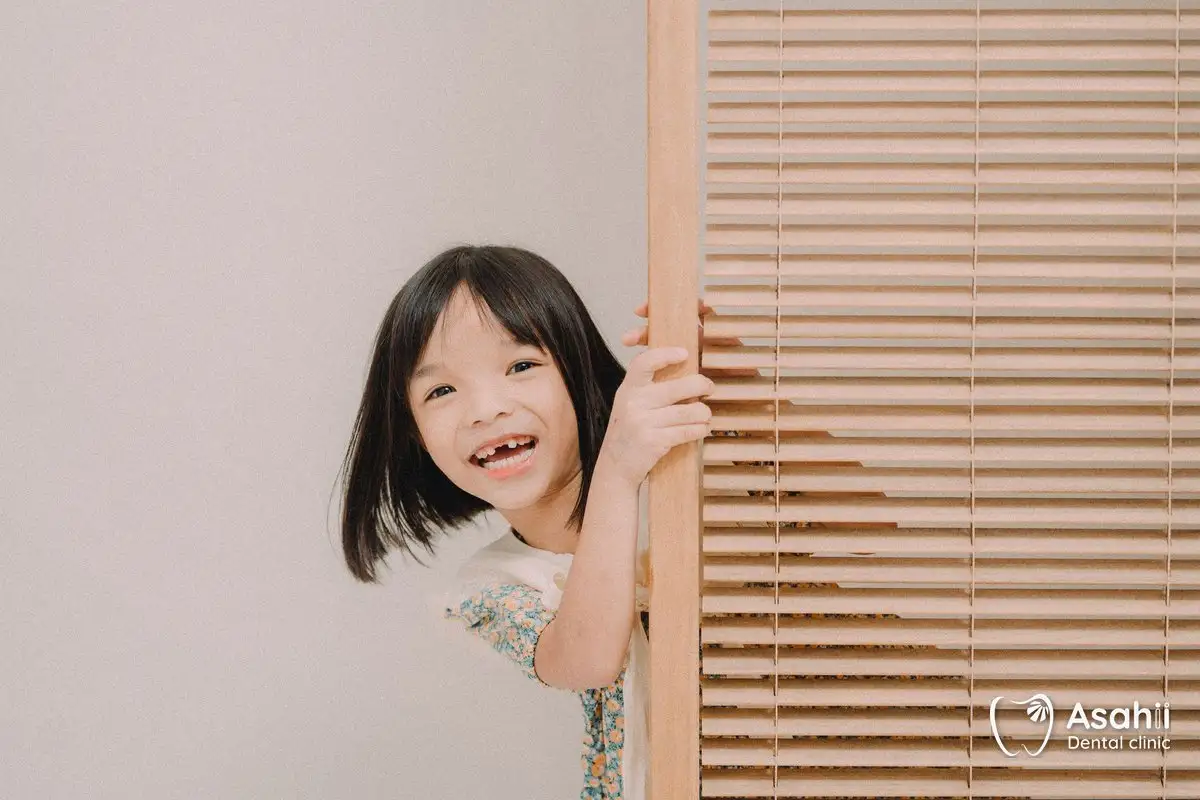
The years of losing baby teeth are when parents can most easily notice crooked, crowded or gappy teeth
How the upper and lower jaws meet when the child bites.
Whether the arches are wide enough for the permanent teeth still to come.
Whether any habit is affecting the teeth and jaws.
The key point is that a child's jaws are still growing. Some skeletal problems are easier to guide during growth, while in adults the options can be narrower. Many orthodontic associations recommend a first orthodontic check at around seven. That is an age for a check-up, not an age at which a child must wear an appliance.
Tooth eruption by age: a rough guide
Knowing roughly which teeth come in when helps parents worry less when their child's teeth look "odd", and notice when it is worth asking the orthodontist. The ages below are common ranges, not deadlines: any child can be a few months, sometimes up to a year, earlier or later, and girls tend to change teeth a little earlier than boys. What deserves attention is a tooth that is far out of step with the same tooth on the other side, or much later than in other children of the same age.
From about 6 months to 3 years
Usually coming in: the first baby tooth (usually a lower front tooth) appears at around 6 to 10 months; by about two and a half to three, most children have all 20 baby teeth.
Watch for: falling asleep with a bottle, white spots or brown marks on the upper front teeth, long-term dummy use. This is the time to start brushing for your child and to introduce the dentist.
From about 3 to 6 years
Usually seen: a full set of baby teeth, sometimes with gaps between them; that is usually a good sign, because the larger adult teeth need more room.
Watch for: thumb-sucking or a dummy that hasn't been dropped; mouth breathing or snoring; decayed or early-lost baby teeth; lower teeth sitting in front of the upper ones, or the jaw shifting to one side on closing.
From about 6 to 8 years
Usually coming in: the first permanent molars (often called the six-year molars) come in behind the last baby teeth without replacing any; the lower central incisors change, then the upper central incisors and the lateral incisors in turn.
Watch for: adult front teeth coming in behind baby teeth that haven't fallen out (like "two rows of teeth"); crowded or rotated front teeth; upper front teeth sticking out a lot. A small gap between the upper front teeth and slightly fanned-out incisors are common at this age and may close as the other teeth come through. This is also the stage for a first orthodontic check.
From about 9 to 12 years
Usually coming in: the canines and premolars replace the baby canines and baby molars; the upper canines often come late in this group.
Watch for: a baby tooth still firm when the adult tooth is already showing beside it; an upper canine that is late or bulging in an unusual place; protrusion, an underbite or a jaw shift becoming more obvious as the child grows quickly. The growth spurt around puberty is a time the orthodontist can make use of with some appliances.
From about 11 to 13 years onwards
Usually coming in: the second permanent molars (the twelve-year molars); by now most children have all their adult teeth apart from wisdom teeth.
Watch for: crowding, a bite that doesn't meet well, gums that bleed when brushing. Wisdom teeth, if present, usually come much later, in the late teens or after.
If your child's teeth are well out of step with these ages, for example one side has changed while the other stays the same for a long time, that is a reason to book an X-ray check, not necessarily a sign of a problem.
Signs parents can notice themselves
You do not need dental training to notice a few things when your child smiles, talks, eats or sleeps. If you see any of the signs below, bring your child in sooner rather than waiting until seven.
Teeth and bite
Upper front teeth sticking out well beyond the lower ones, or lower teeth sitting in front of the upper ones when biting.
A gap between the upper and lower front teeth when the back teeth are closed together.
The lower jaw shifting to one side as the child closes.
Permanent teeth coming in crowded, rotated, or tilted inwards or outwards.
Baby teeth lost very early (decay, a fall) or very late: the adult tooth is showing but the baby tooth is still firm.
Habits and breathing
Still sucking a thumb, using a dummy or biting the lip after starting primary school.
Often breathing through the mouth, sleeping with the mouth open, snoring regularly.
The tongue pushing between the teeth when swallowing or talking.
Eating and daily life
Often biting the cheek or lip; difficulty chewing, or chewing on one side only.
A face that looks asymmetric, or a chin that seems unusually set back or prominent.
None of these signs proves that something is wrong. They are simply a reason for the orthodontist to take a closer look.
What happens at a child's first orthodontic visit?
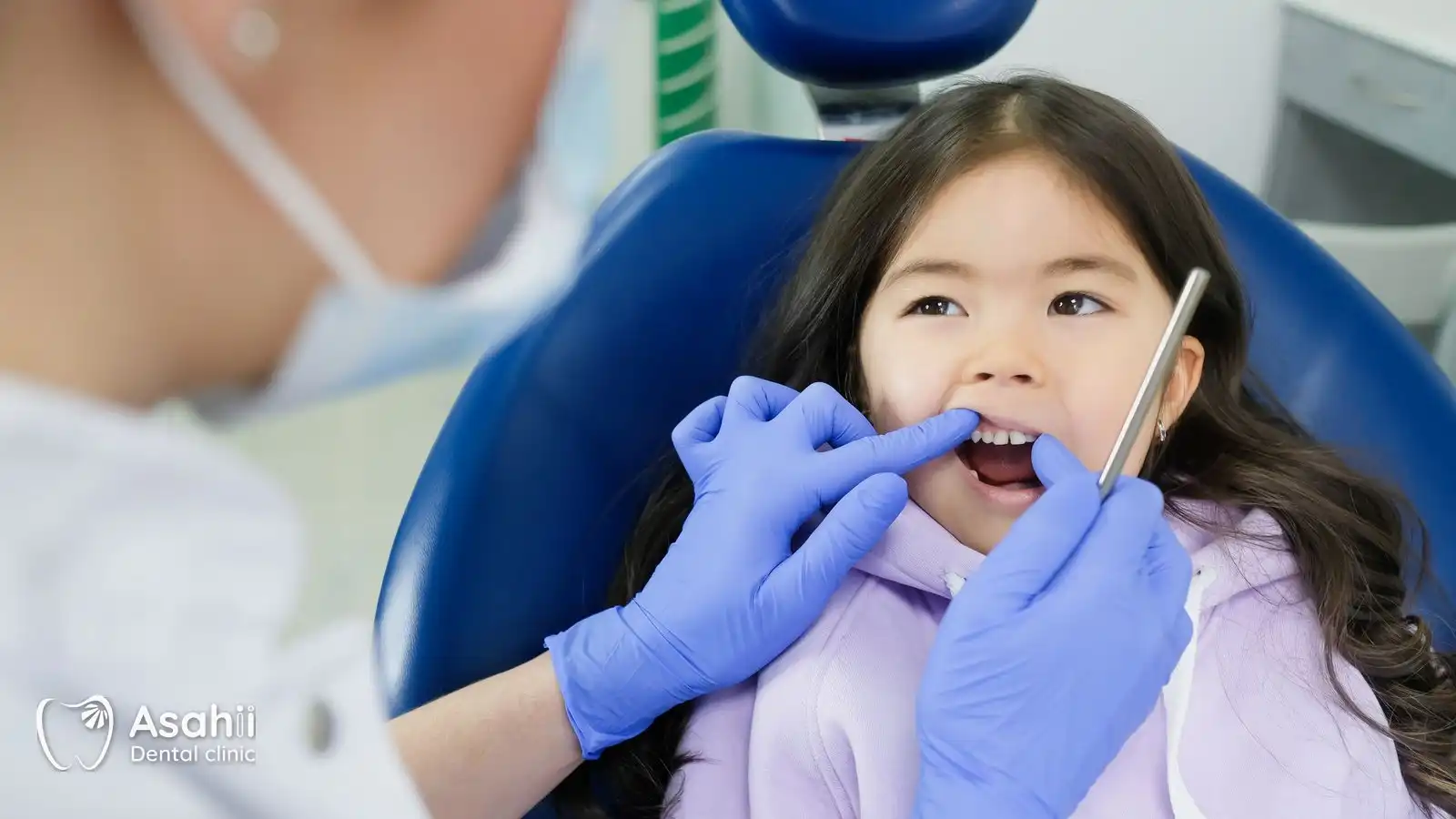
The first visit is usually gentle and there is no obligation to start treatment. Depending on the child, the orthodontist may:
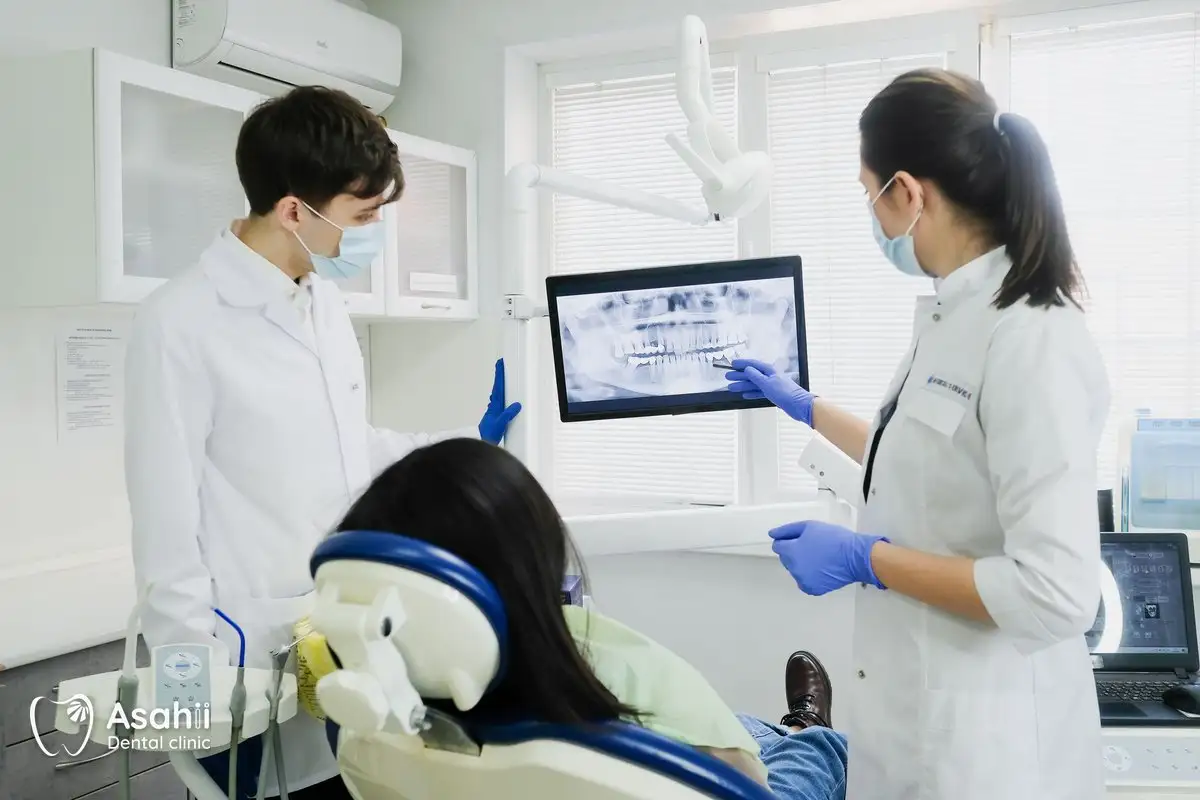
An X-ray shows the permanent teeth still under the gum, which an eye check alone cannot see
Talk with you about how the teeth came in, habits, sleep and the family's dental history.
Examine the mouth and the face: which teeth are through, how the jaws meet, how the child swallows and breathes.
Take X-rays if needed, to see where the unerupted permanent teeth are and whether any are missing or extra.
Explain what they see and suggest one of three routes: nothing yet, just regular monitoring; dropping a habit; or considering early treatment.
At Asahii Dental Clinic, orthodontic checks for children are carried out by Dr. Chu Thuy Trinh, the clinic's medical director in charge of orthodontics. Your child's X-rays and photographs are kept in the clinic's records, so at the next check the doctor lays them side by side to compare, and parents can look at them again too.
Tip from Dr. Chu Thuy Trinh: You don't need to wait until all the baby teeth are gone. A check-up around age 7 is mostly about watching: most children need nothing yet, but the family learns early what to look out for.
If the orthodontist suggests monitoring, keep the appointments; for Asahii patients, monitoring visits are reminded automatically through the clinic's Zalo Mini App. Children's teeth change quickly during the years when baby teeth are lost, and comparing visit by visit helps the orthodontist pick the right moment.
How to help your child feel at ease
Tell your child beforehand in simple words: "Today the doctor is just going to look at your teeth and count them."
Avoid words like "hurt", "injection" or "pull out" when talking about the visit.
Choose a time when your child is not hungry or sleepy. The clinic is open every day of the week, 08:30 to 19:00, so you can come at the weekend.
Bring any previous X-rays or dental records if you have them.
This is what worries parents most. An early check is about knowing early. Most children seen at this age only need good dental care and a return visit on schedule. Only some conditions are considered for treatment during the mixed dentition, and that decision is always based on an examination and the child's own X-rays.
Alongside orthodontics, keep up the six-monthly dental check-ups to prevent decay in baby teeth. Healthy baby teeth that fall out at the right time also help keep space for the adult teeth. To get children brushing for the full two minutes, the "Brush with Asa" game in the Mini App times them and awards a star after each brush. See Tooth decay in baby teeth: prevention and when to see a dentist.
When to bring your child in straight away
A fall or knock that breaks, loosens or knocks out a tooth.
An adult tooth fully through while the baby tooth is still firm.
Pain when chewing, a clicking jaw, or difficulty opening the mouth.
Loud snoring with pauses in breathing, and tiredness during the day.
Every child's teeth and pace of growth are different, so only an examination can show what your child needs. See our orthodontics and braces page or book a visit for your child by hotline 0928 888 121, Zalo or the Mini App.
Frequently asked questions
My child is only six and the teeth look a little crooked. Should we see an orthodontist?
You can bring your child in. Newly erupted front teeth often look slightly crooked and may partly straighten as the other teeth come through, but only an examination can tell what is normal and what needs watching.
Does a first orthodontic check always include X-rays?
Not for every child. The orthodontist takes X-rays when they need to see unerupted teeth or assess the jaws, and explains why before taking them.
If treatment is not needed yet, when should we come back?
Monitoring visits usually follow the stages of tooth eruption, somewhere between every few months and once a year, depending on the child.
If a parent has protruding teeth or an underbite, will the child have it too?
Jaw shape has a hereditary element, but not every child takes after their parents. That is one more reason for an early check so the orthodontist can keep an eye on things.
This article is general information reviewed by our dentist; it is not a diagnosis. Only an examination can say what your teeth need.
Was this article helpful?
Tap a star — 1 is not helpful, 5 is very helpful.
Thank you! Your rating helps us write better.
Could not send right now — please try again later.
Why baby teeth matter, the signs of decay in children, prevention at home, when the first dental visit should be and how to help a child not fear the dentist.