Fixed braces or Invisalign: how to choose what suits you
Torn between fixed braces and Invisalign clear aligners? Questions to help you decide: your teeth, your daily routine, self-discipline, check-ups and cost.
Article series · Part 9 of 12Braces for kids: a parent's guide
You have read about the different appliances and know how metal braces, ceramic braces and clear aligners differ, but you still cannot decide between fixed braces and Invisalign. That is normal: both move teeth effectively when properly indicated, so the choice depends more on you than on which appliance is "better". This article does not compare each type again (see Metal braces, ceramic braces or clear aligners); instead it suggests questions to ask yourself before you sit down with the orthodontist.
In short: • Fixed braces and Invisalign both move teeth effectively when properly indicated; which suits your case is for the orthodontist to decide after an examination and X-rays. • Aligners only work when worn about 20 to 22 hours a day; fixed braces stay on, so they don't depend on you remembering. • Your eating habits, self-discipline, how much appearance matters, check-up schedule and cost are things you can weigh up yourself. • Some cases combine both at different stages.
Question 1: Are my teeth suitable for aligners?
This one is for the orthodontist to answer, not you. Clear aligners today can handle many problems, from crowding and gaps to some cases of protrusion and deep bite. But some tooth movements are easier to control with brackets, and some cases need aligners combined with extras such as attachments on the teeth, inter-arch elastics or mini-screws.
So the first step is always an examination and records. After analysing your X-rays and photographs, the orthodontist will tell you which group your case falls into:
Suitable for both, so you can choose based on your needs.
Suitable for both, but one has a clear advantage.
Better treated one particular way, or with a combination at different stages.
With Invisalign, the planned tooth movements are simulated in ClinCheck software before the aligners are made, so you can look through the expected steps with the orthodontist. The simulation is a plan, not a promise of the result: real teeth still respond differently from person to person.
Question 2: Will I really wear aligners 20 to 22 hours a day?
Aligners only work when they are in your mouth. You take them out to eat, to drink anything other than water and to brush, then put them straight back in. Be honest with yourself:
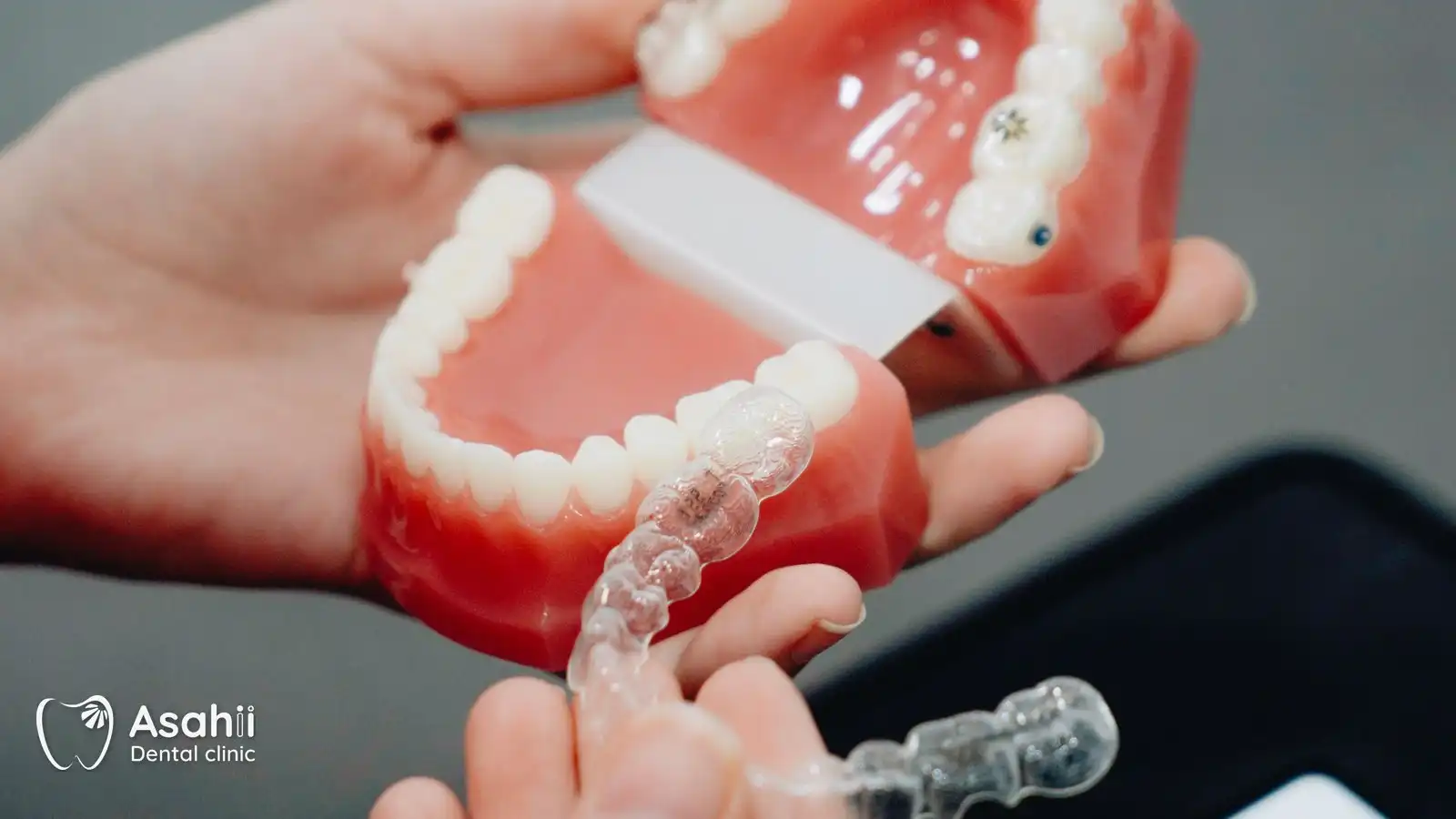
Clear aligners are barely visible when smiling, but only work when worn about 20 to 22 hours a day
Do you snack throughout the day, or sip coffee or milk tea for hours?
Does your work involve many meals out, client dinners or trips where you can't control mealtimes?
Do you often forget or lose small things?
If you answer "yes" to several, fixed braces, which stay on and work day and night without you having to remember anything, may be easier for you. If you have a regular routine and good self-discipline, aligners let you eat almost normally.
Question 3: How much does appearance during treatment matter?
Clear aligners are barely visible in conversation; ceramic brackets are less noticeable than metal ones. If you often speak in front of groups, are photographed or filmed, how you look during one to two years of treatment may weigh heavily. But if braces don't bother you, that is one less reason to choose aligners.
It's also worth knowing that aligners may still involve small tooth-coloured attachments on the teeth, and elastics at some stages.
Question 4: How do I look after my teeth?
With fixed braces: you need to brush carefully around the brackets, use interdental brushes, and avoid hard, chewy and sticky food. People who don't clean thoroughly are prone to gum inflammation and white spots around the brackets.
With aligners: brushing is easier because you take the aligners out, but you must brush or at least rinse before putting them back, or food is held against your teeth inside the aligner for hours.
If you have fixed braces at Asahii Dental Clinic, the after-bonding care instructions are in the Zalo Mini App to look up at any time. See also Eating and oral hygiene with braces.
Question 5: What are my schedule and check-ups like?
With fixed braces, the orthodontist needs to see you regularly to change wires and adjust forces, usually every few weeks. With aligners you change trays at home on a schedule and visits can be further apart, but you still need to come in on time so the orthodontist can check that the teeth are following the plan. People who travel a lot may find aligners more convenient, provided they bring enough trays and stick to the changing schedule. Asahii is open every day of the week, 08:30 to 19:00, so working patients can book at weekends whichever option they choose.
Question 6: Cost and what is included
Clear aligners usually cost more than fixed braces. When comparing, look at the whole package: records, any extra appliances, number of visits, additional aligners (with Invisalign), repairs if a bracket comes off, and retainers afterwards. At Asahii, the orthodontist sets the options side by side and gives a clear price for each; the plan is written down item by item with its costs and starts only once you have confirmed it.
Quick comparison: fixed braces and Invisalign
This section gathers the points above criterion by criterion, so you can take it along to your consultation. These are typical patterns; for your own case, the orthodontist will be specific after the examination.
Hours of wear
Fixed braces: bonded to the teeth, working day and night; you never have to remember to put them in or take them out.
Invisalign: needs to be worn about 20 to 22 hours a day; you take the aligners out only to eat, to drink anything other than water and to brush, then put them straight back in.
Eating
Fixed braces: you can eat most foods, but cut them small and avoid very hard, chewy or sticky food, which can loosen a bracket or bend the wire.
Invisalign: you remove the aligners, so you eat almost normally, but every meal and every milk tea or coffee is time the aligners spend out of your mouth; snacking through the day eats into the hours.
Cleaning
Fixed braces: you need to brush carefully around each bracket and use interdental brushes; less thorough cleaning easily leads to gum inflammation and white spots around the brackets.
Invisalign: you brush as usual because the aligners come out, but you must brush or rinse before putting them back, and clean the aligners as instructed.
Check-ups
Fixed braces: the orthodontist needs to see you regularly to change wires and adjust forces; visits are usually about every 4 to 8 weeks, depending on the stage.
Invisalign: you change aligners at home on a schedule and visits can be further apart, but you still need to come in on time so the orthodontist can check that the teeth are following the plan.
Cases each usually suits
Fixed braces: can be used for almost all kinds of problems, including complex cases that need control over many kinds of tooth movement.
Invisalign: can be used for many problems such as crowding, gaps and some cases of protrusion or deep bite; complex cases are for the orthodontist to assess, and may need attachments, inter-arch elastics or mini-screws as well.
Appearance during treatment
Fixed braces: metal brackets are easy to see; ceramic brackets are less noticeable.
Invisalign: clear aligners are very hard to see in conversation, although there may be small tooth-coloured attachments on the teeth.
Who does each option tend to suit?
No option suits everyone. When the orthodontist tells you that your case suits both, the pointers below can help you lean one way or the other.
Fixed braces often suit people who:
Tend to forget or lose small things, or know they would struggle to keep up the daily hours.
Eat at irregular times, have many meals out with clients, or can't easily choose when to take aligners out.
Don't mind brackets showing when they smile, or choose ceramic brackets to make them less visible.
Have a case that needs control over many kinds of tooth movement, where the orthodontist finds brackets more practical.
Are children or teenagers not yet reliable with aligners, when parents can't follow up every day.
Invisalign often suits people who:
Have a regular routine and good self-discipline, and are used to removing aligners to eat and putting them back right after brushing.
Care a lot about appearance during treatment: they speak in front of groups, meet many people, or are often photographed or filmed.
Travel a lot and find it hard to come to the clinic often, provided they bring enough aligners and keep to the changing schedule.
Want to brush and floss as usual.
Have teeth that have shifted after earlier braces, when the orthodontist judges aligners can handle it.
These pointers are only there to help you know what to ask. If the orthodontist feels your case should be treated one particular way, ask for the reasons and picture how that option would fit into your ordinary day.
You don't always have to pick just one
In some cases the orthodontist may combine them: fixed braces for a stage that needs more control, then aligners, or the other way round. For children who still have baby teeth, there is Invisalign First for that stage, alongside other growth-guidance appliances. Asahii offers metal and ceramic braces (including Damon self-ligating systems) as well as Invisalign aligners; Dr. Chu Thuy Trinh, who plans the clinic's orthodontic cases, holds Invisalign certification (2023) and has completed the Invisalign Enhanced Course (2025).
Aligners come out for meals and go in their case, which makes eating easier but needs self-discipline
Tip from Dr. Chu Thuy Trinh: Clear aligners only work when they're worn enough hours. If your child tends to forget, fixed braces are often the easier choice for the whole family.
When to see us straight away
An aligner that no longer fits snugly, or is cracked, broken or lost.
A loose bracket or a wire poking your cheek that you cannot manage at home.
Teeth that ache badly for a long time, swollen gums or heavy bleeding.
Whether fixed braces or aligners suit you can only be decided after an examination and X-rays. See our orthodontics and braces page or book a consultation by hotline 0928 888 121, Zalo or the Mini App so the orthodontist can compare both routes for your own case.
Frequently asked questions
Is Invisalign faster than fixed braces?
Treatment time depends mainly on your teeth and on wearing the appliance and attending check-ups as instructed, not much on whether you choose aligners or braces.
I had braces before and my teeth have shifted. Can aligners help?
Many cases of teeth shifting after earlier braces can be corrected with clear aligners. The orthodontist needs to examine you and take X-rays to assess how much before recommending it.
Do aligners affect how I speak?
For the first few days some sounds may come out slightly differently, then the tongue usually adapts. If it lasts, mention it at your next check-up.
What happens if I don't wear the aligners for enough hours?
The teeth fall behind the aligners, the next trays may not fit snugly and the plan slows down. If you find it hard to keep up the hours, tell the orthodontist early so you can find a solution together, including switching to fixed braces if suitable.
This article is general information reviewed by our dentist; it is not a diagnosis. Only an examination can say what your teeth need.
Was this article helpful?
Tap a star — 1 is not helpful, 5 is very helpful.
Thank you! Your rating helps us write better.
Could not send right now — please try again later.
A teenager's cooperation has a big effect on how braces progress. How parents can support hygiene, elastics, aligner wear, confidence and school schedules.
· 5 min read·
Book a visit
Book a orthodontics & braces consultation
Leave your phone number – our front desk will call you back to find a time that suits you.