Do braces always mean having teeth taken out? When extractions are needed and other ways to make space
Not everyone with braces needs extractions. Why some cases do, other ways to make space (expansion, enamel reduction, moving teeth back) and what to ask.
Article series · Part 7 of 12Braces for kids: a parent's guide
"Will I have to have teeth taken out for braces?" is one of the questions that makes people hesitate most before starting. The short answer: not everyone does. Some people complete treatment without losing a single tooth; for others the orthodontist suggests removing a few so the remaining teeth have room to line up. This article explains why cases differ, what other ways there are to make space, and what to ask your orthodontist before deciding.
In short: • Not everyone with braces needs extractions; it depends on how much space is missing, how far the teeth protrude, how the jaws relate and each person's face. • When only a little space is missing, the orthodontist may make room by widening the arch, reducing a little enamel between teeth, moving teeth back (often with a mini-screw) or changing the angle of the teeth. • Panoramic and lateral skull X-rays and the measurements taken on them are the basis for the choice, not how the teeth look to the eye. • When there are two routes, you should have the pros and cons of each explained before you decide.
Why do braces need "room"?
Picture the dental arch as a bench and the teeth as people sitting on it. If the teeth together are wider than the arch is long, they come in rotated, overlapping, sticking out or tucked in. To line them up, the orthodontist needs enough room: by making the "bench" longer, making the "people" a little slimmer, or asking one person to leave.
Besides crowding, space is also needed to move the front teeth back in people whose teeth stick out. Front teeth that protrude can only move back if there is space behind them.
When might the orthodontist suggest extractions?
Extractions in orthodontics are not because the teeth are bad, but to create space according to the plan. Orthodontists usually consider them when:
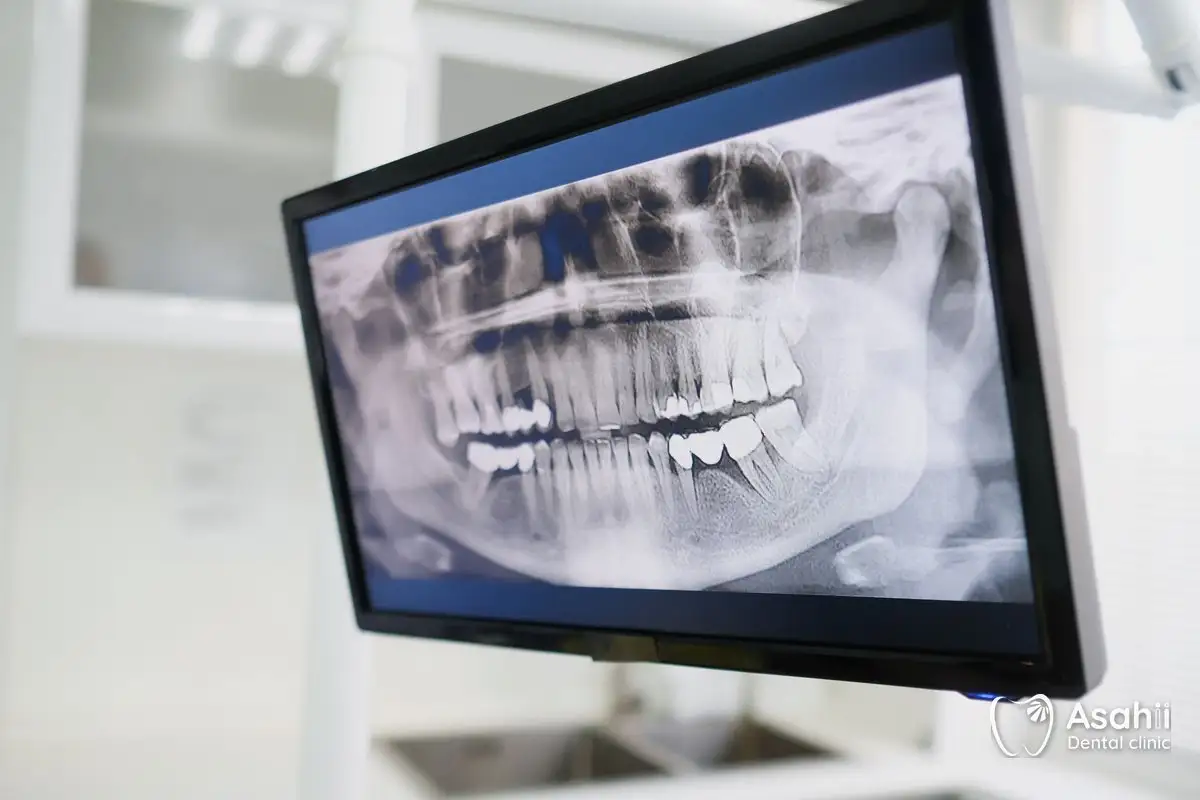
A panoramic X-ray shows the space in the arch, wisdom teeth and unerupted teeth, the basis for deciding on extractions
Crowding is severe and the space shortfall is too large for other methods to make up.
The teeth protrude a lot, the lips are hard to close, and the front teeth need to move back significantly.
The jaws relate in a way where removing teeth in one or both jaws gives a more balanced bite.
A tooth is impacted, in the wrong place or badly damaged, so it makes sense to remove that tooth rather than a healthy one.
The teeth most often chosen are premolars, because they sit in the middle of the arch, create space where it is needed and have little effect on chewing. Still, which teeth and how many is a decision made for each person.
What about wisdom teeth? Whether wisdom teeth come out is usually a separate question that depends on how they are growing. Your orthodontist will look at the X-rays and tell you whether your wisdom teeth matter for your braces. See Impacted wisdom teeth: when do they need to come out?.
Ways to make space without extractions
When the shortfall is not too large, the orthodontist may create room with one or a combination of the following:
Widening the arch
In growing children, a narrow upper arch can be widened with an appliance, creating room and correcting a crossbite. In adults, expansion is more limited because the bone has matured: the teeth can be tipped outwards a little to widen the arch, but expanding beyond the limits of the bone around the teeth can thin the outer gum and cause recession. So expansion usually suits people whose arch really is narrow; it is not a method for every case of crowding. See Early orthodontic treatment for children.
Reducing enamel between teeth
The orthodontist slightly narrows the sides of some teeth, within the safe limits of the enamel, gaining small fractions of a millimetre. Added up over several teeth, this can be enough for mild crowding. This is also called stripping or interproximal reduction.
Done to the right degree, enamel reduction does not weaken the teeth, because only a very thin layer of enamel is removed. The orthodontist assesses the thickness of the enamel and the shape of the teeth before deciding which teeth to reduce and by how much, and often spreads it over several visits as treatment progresses. Afterwards the surfaces are polished and you brush and floss as usual. It does not suit teeth with large fillings, teeth that are already small, or cases that lack a lot of space.
Moving teeth back
A whole group of teeth can be moved back if there is room in the bone behind them. This is often considered when the molars have drifted forward, or when a little space is needed along half of the arch. Whether there is room behind, the orthodontist checks on the X-rays, including the position of the wisdom teeth.
Moving teeth back with a mini-screw
When a whole group of teeth is pushed back, the force always works the other way too: if it leans on other teeth, those teeth get pushed as well. A mini-screw is a small screw placed temporarily in the jaw bone as an anchor that barely moves, so the force goes into the group of teeth that needs to move back. This gives the orthodontist a non-extraction option in some cases that would once have needed extractions. The mini-screw is removed once it is no longer needed. Still, mini-screws have their limits: how far the teeth can move back depends on the bone behind them, and not every case of protrusion or crowding can avoid extractions thanks to a mini-screw. See Mini-screws in orthodontics: when are they needed and do they hurt?.
Changing the angle of the teeth
Front teeth that lean inwards can be tipped out a little to lengthen the arch. This suits some people, but if the front teeth already stick out, pushing them further makes the protrusion worse.
In practice, orthodontists often combine several of these methods, each contributing part of the space, rather than relying on one alone. What matters is that the total space gained is enough for your case without pushing the teeth beyond the limits of the bone and gums.
How do X-rays and their analysis decide?
To the eye, two people with similar crowding can need very different plans. The reasons lie in what can only be seen on X-rays and models:
A panoramic X-ray shows all the teeth and roots, unerupted teeth, wisdom teeth, impacted teeth or teeth missing from birth. The orthodontist can see whether a tooth should come out because it is damaged or in the wrong place, and whether there is room behind to move teeth back.
A lateral skull X-ray (cephalogram) shows the face in profile. The orthodontist traces and measures on it to see how much the front teeth lean relative to the jaw, how the upper and lower jaws relate, and where the lips sit relative to the nose and chin. This is how they know whether the front teeth can be tipped out further or, on the contrary, need to move back.
A cone beam CT scan is taken when needed, to see whether the bone around the teeth is thick or thin, where the roots sit in the bone, or where an impacted tooth lies in three dimensions.
Models or a digital scan measure the width of each tooth and the length of the arch precisely, which shows how much space is missing.
Only by setting these measurements alongside your facial photographs and what you want can the orthodontist say whether your case can gain enough space without extractions. At Asahii, panoramic, cephalometric and, when needed, cone beam CT X-rays are taken at the clinic and attached to your records; the measurements on the cephalogram are kept so they can be compared between visits during treatment.
Extraction or not: what does the orthodontist weigh up?
There is no approach that is "always right". The orthodontist puts the factors side by side:
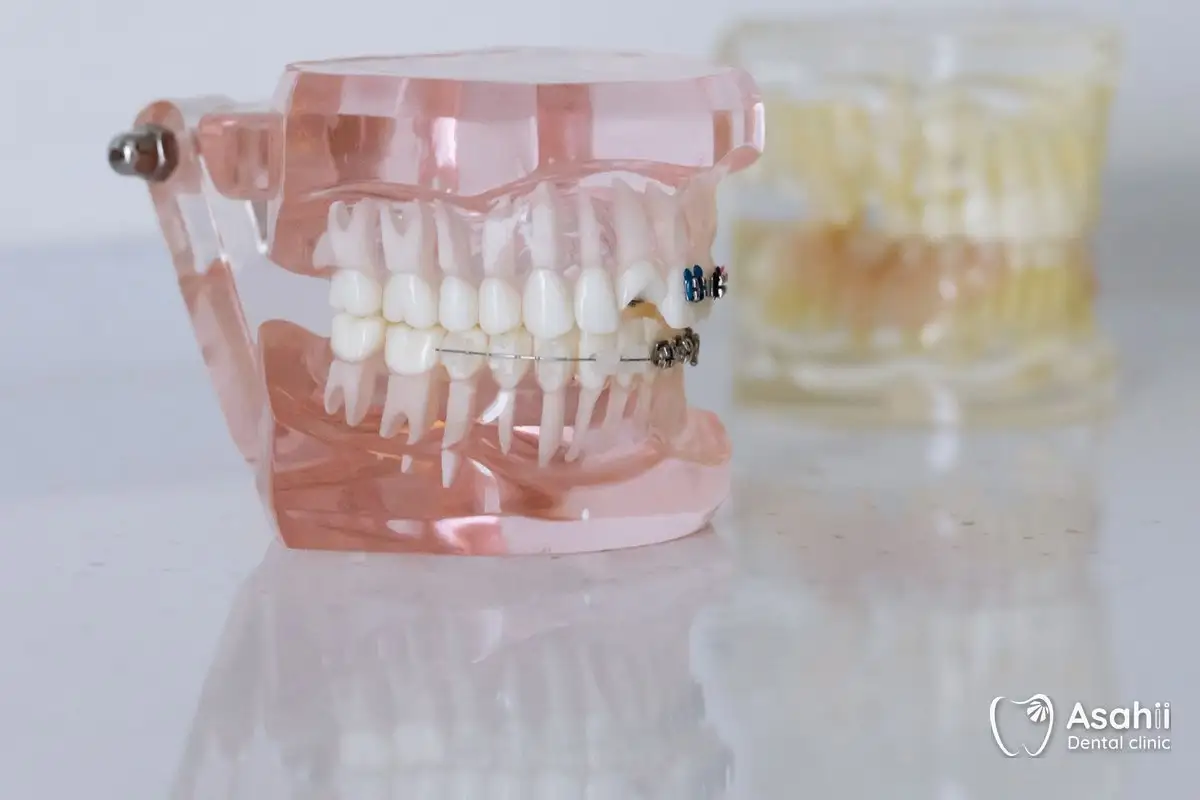
Expansion, slimming teeth or moving them back can make space instead of extraction in some cases
The amount of space missing, measured on models or a digital scan.
How far the teeth protrude and where the lips sit, assessed on facial photographs and a lateral skull X-ray.
How the upper and lower jaws relate, seen on X-rays.
The gums and bone around the teeth: expanding or moving teeth beyond their limits can thin the bone and cause gum recession.
Age: growing children have more options.
What you want for your profile and treatment time.
At Asahii Dental Clinic, Dr. Chu Thuy Trinh analyses each person's X-rays and photographs before drawing up the plan. When there are two routes (for example extractions, or no extractions combined with a mini-screw), the doctor explains the pros and cons of each and sets the options side by side; the plan is written down item by item with its costs, and starts only once you have confirmed it. Your X-rays and photographs are kept in your records, so you can look at them again while you think it over.
Tip from Dr. Chu Thuy Trinh: Whether to take teeth out is a conclusion from the X-rays and bite analysis, never a default. When it's needed, I explain why on your own X-rays.
Do extractions for braces have downsides?
Many people worry that extractions will make the face look sunken or the teeth weaker. When they are properly indicated, the extraction spaces are used to align the teeth and are closed during treatment, leaving no gaps. On the other hand, avoiding extractions in a case that really lacks space can push the front teeth forward, make the lips hard to close and give a less stable result. So the right question is not "extraction or not" but "which plan suits my teeth, my jaws and my face".
How much space is missing in my case, and why do I (or don't I) need extractions?
Without extractions, what are the ways to make space, and what are their limits?
Which teeth would be removed, and why those?
How does each option affect my profile, the treatment time and the cost?
When to see us straight away
During treatment you notice receding gums, clearly loose teeth or exposed roots.
Bleeding that will not stop, increasing swelling or fever after an extraction.
Front teeth sticking out more and more, or lips harder to close, despite treatment.
Whether you need extractions can only be answered after an examination, X-rays and an analysis of your bite. See our orthodontics and braces page or book a consultation by hotline 0928 888 121, Zalo or the Mini App.
Frequently asked questions
Can I have braces without extractions?
Many cases do not need extractions, especially when only a little space is missing or the child is still growing. For marked crowding or protrusion, the orthodontist may suggest extractions. Only an examination and X-ray analysis can tell which group your case belongs to.
Does having teeth taken out for braces hurt?
Extractions are done under local anaesthetic. Afterwards there may be some tenderness and mild swelling for a few days; the dentist explains aftercare and prescribes medicine if needed.
Do the extraction gaps close completely?
In a plan that includes extractions, the spaces are used to align the teeth and are closed during treatment. How long space closure takes depends on the case and is part of the overall treatment time.
Do wisdom teeth have to come out before braces?
Not always. The orthodontist looks at the X-rays to see how the wisdom teeth are growing and whether they affect the plan, then makes a recommendation.
This article is general information reviewed by our dentist; it is not a diagnosis. Only an examination can say what your teeth need.
Was this article helpful?
Tap a star — 1 is not helpful, 5 is very helpful.
Thank you! Your rating helps us write better.
Could not send right now — please try again later.